Search This Blog

14 June 2012

Terry Pratchett presents "Miss Felicity Beedle's The World of Poo" a Discworld Delight for Readers of All Ages


Sh!t

There are entirely too many funny moments in this book for it's length.  Poo is certainly an unappreciated topic.  As a kid I used to read stories and wonder why no one used the toilet.  Especially those "run through the woods hunted by bad guys for days" books.  I mean, they must GO eventually and so must the bad guys, presumably.  I always felt that as you are squatting and thinking about the nearest suspicious leaf, it would be the ideal moment for an ambush.  Or the good guys could ambush the bad guys's tracker! etc.  Never happened though.

In this book everybody goes, except the grandmother, of course.  She only recommends the constant cleaning of hands.  Along the way some wonderful information is shared with the reader.  Pratchett and Miss Beedle manage to educate the reader in the most furtive way possible and given the topic this is a feat.  That one piece of information on a page that I am certain must be made up, when researched and backed up by footnotes, turns out to be based entirely on facts.  Life is weird and poo is weirder or at least our treatment of it.  I love it.

I looked about for a boy of the appropriate age to gift this jewel to and found him.  I can't wait to be able to discuss this book with someone who can read it in the right spirit. Maybe I'll suggest he read it in the bathroom.  It might be inspiring.  God knows reading in the w.c. is one of my favorite hobbies.  Though I should leave books and magazines in the hall to entertain and distract anyone that may be waiting... and waiting..

Scatological humor is rare in this day of sophistication and subtlety.  Not to be confused with eschatological humor which refers to the apocalypse... though in my family the dangerous combination of peaches and beer is notorious for having produced such a smell and deluge in the loo that eschatological jokes came to mind i.e. it is precisely what the end of the world would smell like.

Terry Pratchett 
ISBN: 9780857521217

31 May 2012

'The Annotated Brothers Grimm' edited with a preface and notes by Maria Tatar - 'The Last Unicorn' by Peter S. Beagle


Never too old for fairy tales!

As a child I did not read fairy tales.  My mother read them out loud instead.  We were living in a strange country and knew no one.  We spent a great deal of time with our mother.  In retrospect it seems strange that with all the children's literature available in my mother's native tongue, she chose to read us stories of Germanic origin.  The castles, knights, princesses even the stars, sun and moon represented different things in our culture.  They represented conquest and perhaps a bit of envy but I did not know that then.

The stories themselves were the food of my fantasy life (though I must include Japanese animation, but that's beside the point..)  They seemed to open the doors and windows into other worlds.  A fairy tale never really ends.  To me a fairy tale is about beginnings... to grow up, to marry, to discover your own courage, brains, cunning or even luck are all tools you find to build a future, not an end in themselves.

Thinking about the stories my mother read always left me feeling insecure, now I would call it a whiff of Disney.  How shocked I was to read a much bloodier version of Cinderella (probably French) with those cut off toes and heels.  Snow White was another surprise.  She was truly battered by the time she reached the cottage and the witch queen's demise was horrifying.  Nevertheless, I would have appreciated stories that did not leave me so suspicious, you know, smelling Disney colored roses.  It turns out that the final version the brothers Grimm published was quite satisfying.  I recommend the annotations as a real hook to grown ups.  More over, my kids love it when I can add a little fact or disgusting detail to stories they think they know.  It makes them feel that all those questions answered with the notorious "when you are older" are actually being answered.  An annotated version of anything is invaluable in this respect.  This annotated version also tries to balance the great sex divide in fairy tales which might engage boys more.

'The Last Unicorn' is a 20th century fairy tale that feels as old and immortal as he unicorns themselves.  I saw a movie version at least 30 years ago.  I was fascinated by the failure of humans even when in love.  I was also fascinated by how they all pinned their hopes on a creature with its own mind and worries.  I found the book a few years back and was enchanted all over again.  This is a beautiful fairy tale indeed without all the difficult bits cut out.

Tales like these encourage us because they do not lie about our weaknesses, failure or stupidity.  The heroes often need help, guides and signs (usually all of the them several times over).  But these are not post-apocalyptic stories about societies in ruins instead they are about the potential of weak and often stupid individuals who manage to build a happily ever after.

ISBN: 9780393088861
ISBN: 9780451450524

06 May 2012

I Recommend You Read This!!!


I am the sort of reader that does not believe in reading as a solitary activity. Quite the opposite. If I am reading something good I like to talk about it, but this is very hard if the other person has not read the book as well. I will read out loud the good bits to anyone near me.  Beloved Proof Reader heard half of 'Cat's Cradle' and most of 'Moby Dick' this way.  It is one thing to say,"this book is about a lonely, suicidal werewolf" and quite another to discuss the guilt, blood, sharp details, motivations of the protagonist or descriptions of London in the moonlight.

I should point out that if I do not like what I am reading, I am even louder.  The 'Twilight' series were so terrible I asked another adult to read book 1 in case I was being overly sensitive.  It turns out these books are just badly written.  My point is that I will complain long and loud about bad books.  I hate to be robbed of money and time.  Bad writing is not a matter of taste.  I may not like 'The Scarlett Letter' but the book is beautifully written.  A good story idea can be ruined by bad writing.

Beloved Proof Reader hates being told anything important in a book; he thinks I give too much away.  To be fair, he often notices different things than I do, so he finds it annoying to read a book with someone else's preconceptions.  But, if I don't mention an essential theme how do I get him to read the book so as to discuss the essential theme?  By the way, have any of you read 'Catch 22'? great book.  Well you get it, I have my very own reader's catch 22.

Some of my nearest and dearest sought to deflect my literary lectures by convincing me to keep a blog.  Fools!  MUAHAHAHA!!!  I have two broad topics with which I bore my friends: books and food.  My poor victims are often very polite and promise most sincerely to read my new favorite writer at the first available opportunity.  Liars... which is understandable, after all, it counts as a "white lie" i.e. prevents violence to my person ('cause I am driving her/them crazy) and I shut up.  I also have well read friends who will patiently listen, even look at the book I am vigorously swinging under their nose and finally say "Oh, I read this."  Liars.  It is a very disconcerting experience for me.  How dare they read something sooner than me?  But, I shut up and move on to a different topic (or book), which is probably what they had in mind.  

I must add though, that it is always more fun to give than to receive, especially book recommendations. So what happens if someone traps me between a wall and a good book?  Good question.  My reaction depends on the source.  If the source is one of my well-read friends, then I trust their opinion.  If it is someone who thought "Twilight" was good, then she is not trustworthy.  Recommendations or reviews on Amazon are often a matter of luck.  'The Economist' and 'The Wall Street Journal' are great sources of book reviews, especially when I want to read non-fiction.

In defense of my booky conversations, I argue that it is healthier to discuss the suicidal tendencies of a werewolf than the vitriolic tendencies of a real couple who's marriage is currently falling apart.  I may come off as an awful bore but at least I won't come off as just plain awful.  There is something exciting about opening a papery object and stepping into another world.  It is easy, cheap, good against dementia and provides me with something pleasant to talk about.  Let's face it, we do too much complaining and worrying.  When I accost a friend with 'The Elegance of the Hedgehog', I want to share beauty and joy.  I do hope you understand because it is perfectly obvious to most of my friends that this blog has only made things worse.

MUAHAHAHAHAHA!!!!!!

28 April 2012

'1Q84' Books 1, 2, 3 by Haruki Murakami


Sex, violence, unpredictability, a keen awareness of the unknowable, perception of reality, love, indifference, happiness and secrets

Finally, I finished reading them as one book!  It has been ages since 'Kafka on the Shore'.  In the mean time, I read several of Murakami's other books.  The length of 1Q84 made me salivate (mentally, of course, it's been years since I drooled on my books).  It was so much more than I had hoped.  Murakami and his surreal worlds are imaginative, completely subjective yet believable.

This time his story has an under current of menace.  It is a faceless sense of danger that I could not relieve.  Every now and again I would put the book down to catch my breath.  Of course, it would not be long before I picked it back up and got that creepy feeling again.  The book covers just too many topics to discuss here; sex, violence, unpredictability, a keen awareness of the unknowable, perception of reality, love, indifference, happiness and secrets.  Each one of these themes are worthy of independent essays.

Murakami must be a firm believer in individuality and independence, especially when in love.  Live your life based on who you are not who you think you should be or who people tell you to be.  The key, according to this book, ( I think) is to act on that 'belief in yourself'.  You must live according to your principals without the need for a uniform to give you authority and respect.  You also do not need an overbearing, ill-tempered god to give you comfort and security provided you follow a set of arbitrary rules.  Would you act on your belief to protect the weak and innocent if it meant you had to murder one man?  The key is belief in yourself and when in love... belief in each other.  The story uses love in such strange ways that surreal is once again the only way I could describe it.  Reading what I just wrote I realize that this theme of belief and love may not be new but it felt fresh and unique in this book.

1Q84 is a surreal world being subtly contrasted to 1984.  Several of the protagonists realize that they have entered a surreal (alternate) world.  They become aware of the power of narrative and belief.  Religion as the focus of belief is treated as a prop and dismissed as unyielding and cruel.  If you believe in yourself strongly enough God comes to exist, but not in a religious sense.  She becomes a partner, who helps at your request.  Belief in yourself, respect and the willingness to act become the miraculous tools that can change your reality in tangible ways.

The lives of the protagonists down to their most personal relationships change radically in 1Q84 without reason or logic.  1Q84 does not follow the same rules as 1984.  Perhaps the mysterious 'little people' know the rules?  Our protagonists are vulnerable and at the same time powerful because they have patience and a growing belief in their own narrative as opposed to a tale handed to them by family, religion or 'little people'.

By the way, secrets and the unknowable are very different.  A secret is or was known, understood, even if the secret went with someone to the grave.  The unknowable is just that... no beginning, no end, no answers and no apologies.  The protagonists enter 1Q84 without knowing why and must make up their own answers as they go along.  Then they have to believe in those answers.  Just like you and me, perhaps we live life a little more blindly and don't often notice how much we warp reality and create little 2Q12s of our own.


@harukimurakami_
Haruki Murakami 
ISBN: 9781846555497 

22 April 2012

'The Last Werewolf' by Glen Duncan

Is it morally worse to be an unwilling monster once a month or a willing hunter?

This book struck me as an intelligent thriller with introspection and regrets.  Duncan writes beautifully.  His vocabulary, sentence structure, topics, pace and themes made it a joy to read this book.  I like the meandering philosophy of the protagonist.

How is it that the "monster" is often so much more humane than the humans? As a reader or witness it becomes rather easy to side with the werewolf given the humans that are presented to us.  Issues of trust, fate, choice and loyalty come up, but the readers have to come up with their own conclusions.

The werewolf consumes a life completely.  Memories, feelings, fears, smells, in short, all components of our self-aware existence are felt by our protagonist as he eats.  It can't be very comforting to the victim, but the werewolf feels the life he takes and carries it with him for the rest of his existence.  Is it morally worse to be an unwilling monster once a month or a willing hunter?  These (human) hunters kill not just werewolves but anyone that stands in their way.  They kill without empathy and often to advance personal goals.  They seem hardened by their certainty and self-righteousness.

The ending is exciting and full of twists and turns.  Exciting as it ought to be.  I bought this book knowing it was the beginning of a trilogy.  I worried that it would end in the popular "cliffhanger".  I was relieved to read a proper ending.  The story comes full circle.  Some other characters (unexpectedly) pick up the baton for book 2.  What binds a longer story together seems to be the question "WHY?"  Why do werewolves exist, why must they suffer?  The answers are hinted at but only just.  I feel I have to read carefully, look for clues and pay attention.  This bodes well for the next two books.

Glen Duncan
ISBN: 9781847679468

15 April 2012

'Miss Peregrine's Home for Peculiar Children' by Ransom Riggs

I became aware of my own prejudices and preconceptions

I bought this book as an antidote to my previous reading.  I paged through it at Waterstone's and the photographs gave me the creeps.  A straight forward story about monsters, I thought.  I was wrong but not the way I would normally be wrong.  It is a story about monsters but, as in any good book, the magic is in the telling.

As I read the story, it became obvious that the photographs are an integral part of the story.  These photographs are not illustrations or companions to the story that perhaps outline or frame passages.  Instead, the photographs themselves are indeed "worth a thousand words".  It is a unique story because the telling of it is provided by these photographs like a picture of your great-grandmother brings to life tales you grandmother may have told you.  The children are not only brought to life because the writer provides a good narrative, they come alive through the photographs.

In most books you get to know characters slowly, if only because physical words and the mechanics of writing limit the writer and reader in time and space.  Characters are described, they take certain actions  and eventually you decide their place in the narrative (you cannot always trust what you are told), for example, good, bad, important, annoying, funny etc...  This book begins with the mystery of these children's photographs.  They appear to be figments of someone's imagination, circus performers or the pictures are manipulated.  As we learn more about the protagonist and our protagonist learns to look at these photographs from different mind sets and maturity levels, suddenly the pictures come into focus for the reader as well.

I became aware of my own prejudices and preconceptions.  My own instincts had been wrong.  I was excited every time I could put a face to a myth.  Photography like any visual art requires the viewer to have a certain state of mind in order to see what the artist intends you to experience.  The biases I had, as I first encountered the pictures, were turned on their head.  I was humbled and happy at the same time.

ISBN: 9781594744761

07 April 2012

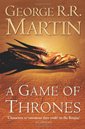
'A Game of Thrones: Book One of A Song of Ice and Fire' by George R.R. Martin

Tolkien writing a version of Conan the Barbarian, edited by Machiavelli

First of all, cool name, of the author, I mean.  It got me thinking about what name I will chose should I ever write that novel my well intention-ed, loving, nearest and dearest wants me to write.

Normally, I would say 'not my kind of book'.  Too much horrid intrigue.  I find intrigue for intrigue's sake annoying.  I like characters to grow and (with luck) reflect.  What with so many knives, swords and poisons around, people often die as soon as they learn something. Those that survive often keep cursing every time something unexpected happens, like a war.  This book has more twists and turns than your first French kiss.  Betrayal, rapes, revenge...  It puts me in mind of Tolkien writing a version of Conan the Barbarian, edited by Machiavelli.

But who am I kidding?  I love fantasy fiction.  Mercifully, there is magic here but only in glimpses; more is on the way, I suspect.  Martin does not feel like a writer who keeps coming up with a better idea of how to back-stab while he writes the book.  It feels like this is the first act just to set the players up.  There is a promise that the best is yet to come.  Promises like these are hard to keep.

It occurs to me that readers often have low expectations of fantasy.  Somehow the bar for suspending disbelief is set lower.  It is probably one of the reasons fantasy is dismissed by some 'serious' readers.  I argue that the opposite is true.  Because it is fantasy, the author and the reader must (together) create a completely new world. The bar must be set that much higher than fiction which takes place in familiar Manhattan with its average rainfall, gravity, litter and total lack of dragons.  Martin has the intrigue down like a proper thriller writer.  In between bouts of gore and regrets he gives us glimpses of the traditions, values and foundations; cultures in which this 'game' plays out.  I am not sure I understand the ramification of all these intrigues within their settings; I am not sure I care yet for this new world with so much death, despair and tears.

One of my real concerns is 'how long does this go on?'  These sorts of epic stories ought to have endings as well crafted as the maze of amoral games in the books.  Publishing houses and often writers, like to squeeze every last penny out of a successful story unnecessarily.  Not only does the writing and the story suffer, but the reader suffers too.  A bad book not only steals my money but my time as well.  I will give this series a try but I am suspicious.

Now, naturally, I have to go shopping for one or two more books.  Beloved Proof Reader made a deep sigh   this morning when informed.  He's lucky I mentioned it at all.

ISBN: 9780007448036

16 March 2012

'Good Omens' by Terry Pratchett and Neil Gaiman

Funny, weird, irreverent, insightful and just a bit warped, in fact, this book contains everything I love about these two writers.  Years and years ago when I was just reading Pratchett I saw this book and thought "what a lucky guy, that Gaiman".  I had no idea that the lucky one is me.

Ok.  So 'Good Omens' describes the apocalypse led by an anti-christ that has a better idea.  Angels, demons, Bentleys, prophets and witch hunters all make an appearance.  I am rather pleased to note how well these two writers know Faust and the Book of Revelations along with tons of other historical details. You don't have to know these topics to enjoy the book but plenty of jokes have added depth if you do.

Right around the time I was finishing 'Good Omens' my daughter heard some sad news on the radio.  She reflected on how it is unfair that one man can ruin the life of 20 people and then affect the life of a 100 more if you include relatives and loved ones.  She was right, of course.  It is sad and short-sighted unkindness, carelessness, jealousy or greed that can cause a great deal of pain.  But then, inspired by this book, I pointed out that the opposite is also true.  An act of kindness can also affect 100 people.  It just does not make the news.

How would I design paradise?  What would I destroy? and more importantly; what would I create?  The apocalypse is justified in scriptures by Justice and renewed paradise.  It is an exclusive club that survives the apocalypse.  'Good Omens' points out, quite well, that we all have our own view of Paradise.   We all have our exclusive club members that will include certain people but is not limited to a favorite car, a beloved garden and definitely a favorite pet.  Is paradise bearable without your cat?  Ok.  But the apocalypse implies even-handed justice and maybe your cat dug in the neighbors's garden one too many times, well, you get my drift.

So what is the solution?  I am ignoring the apocalypse, we should clean our own mess.  As I said to my daughter, "always take the opportunity to do good"... be kind, give someone a smile, help and show gratitude.  You never know how far goodness will go.  Don't try to save the whole world and don't be too quick to judge that hurtful man.  Save your friends, save your own park and encourage your parents to change the types of lightbulbs they use.

If everyone made their own small paradise without hurting others then... well... no Four Riders leading an enthusiastic sanitation army necessary.  We are so powerful, ask any quantum physicist, but also so lazy.  Right... tomorrow I take those bottles to the recycling bin.

ISBN: 9780575080485

26 February 2012

'Is That a Fish in Your Ear? Translation and the Meaning of Everything' by David Bellos

Fantastic book about a difficult, under valued topic.  Read this book and take your time.  David Bellos' arguments are well thought out and often illuminating because we take language for granted.  I usually notice translations when done badly.  I am fairly certain most people have the same experience.  I have tried to put furniture together based on horrific translated instructions.  But, when a translation is done well, who notices, at least in English?

Most of us have news sources that we trust.  What if you found out that most of the news you see or read are translations of the news originally reported? Would you continue to trust your news source?  Probably not.  Most people mistrust translation and often wish that we could read books in their original language.  (I am talking to you manga fans, you know who you are...)  This book is not only about what translation is but what translation does.  Translation in history (remember the Rosetta Stone?), translation of literature, instant translators in conferences, Google Translate and the future of translation are all discussed.

Some of my favorite writers did not write in English, so now I must bounce upstairs and find the name of the heroes who lovingly introduced me to Japanese, Russian, Portuguese and French literature.  I feel rather ashamed of all the writers I desperately rushed through in order to read, comprehend and retain in university.  Without some excellent translations my literary world would be much poorer.  Next time I read Paolo Coelho I will give a silent thanks to his translator for the peace and wisdom I receive as I read.

But this book takes me much further than the art of translation in the literary world.  Bellos defines language, translation and meaning.  He gives some powerful examples to illustrate his points and arguments. Yes, arguments.  People make assumptions about definitions and are shocked when their definitions are wrong or biased, especially about language and meaning.  "Native speaker" and "mother tongue" were quickly dispatched as inaccurate and deceptive terms for language competence.  I cheered out loud and felt vindicated.  He defends his definitions and places them in the context of western culture and philosophy, no small feat for one book.  Without definitions we cannot explore boundaries, argue, learn or share.

He also brings us into the real world of translation.  The European Union and the United Nations are the most unbelievable consumers of translations and translators.  The chapter devoted to law and politics had some real "wow" moments.  Statistics and charts illustrate the hierarchy of languages and the importance they have, for instance, in the dissemination of news.

Every chapter clarified or opened the world of translation and finding meaning.  We are all affected by translation and translators in every aspect of our lives, now I know just how much.  As for the title of the book, it is taken from 'The Hitchhiker's Guide to the Galaxy' so be warned, there is humor in this book as well even if the bagels joke was a little lame.

ISBN: 9781846144646

19 February 2012

'Keeping my Books Clean & Tidy'

I wasn't going to say anything about this issue because dirt and dust do not lend themselves to discussion; what is there to discuss?  You should keep your home clean.  Right.  Books are part of your home, so they should be clean and tidy.  Right.  So much for theory and logic.  Dusting books, in practice, is one of the most difficult tasks I know for several reasons.

1. I hate dusting... not just books, though.

2. Books are exceptionally good at attracting dust, I would argue even better than the television.

3. Once I start dusting I stop on account of picking books up and obviously opening a few to have a look, you know, just in case the letters have moved about...rather like when I rush to the bank before it closes (on an errand for Honey) and I bump into a friend I haven't seen in ages... right in front of my favorite coffee place.

Ok, so I am a failure at dusting, but excellent with coffee.  Eventually the chore gets done and every so often someone (thanks Mom) attacks it with vigor and resolve.

How about neat and tidy, though?  See, that is a divisive issue around here.  My beloved proof reader likes them all in a row, preferably arranged by size with no gaps or books haphazardly placed horizontally above a gap like a makeshift bridge between two old villages.  I, on the other hand, like a messy bookcase.  It feels dynamic; a bookcase that is constantly consulted and shuffled is loved, in fact.  Every now and then I discover something bought but forgotten.  It is like Christmas all over again.  A treasure rediscovered doubles in worth.

And it is not true that my bookcase has no order or logic.  It does to me.  I like to put Vonnegut next to Heller and Irving.  Pratchett is often near Gaiman, Mieville and Murakami.  Fforde sits with them enjoying the show.  Fannie Flagg is with Isabel Allende.  Chekov is with Stoker and, naturally, the Brontes.  Some authors and stories have an affinity in my mind.  Why not?  It is my bookcase after all.  I do keep all the works of the specific authors together with their biographies when applicable, so all of Butcher stays with Butcher.  Bradbury, in case you are wondering, is with Ishiguro.

My books are currently neat and tidy because my mother was just here and attacked them.  But there you are, real life amongst book lovers intrudes... I just bought seven new books.  They are big, they are thick, will they fit any other way but horizontally?  I know, the suspense is killing you.  Proof Reader (aka Honey) resigned himself long ago to MANY books but not the mess.  If he is really lucky his Mother in Law Dearest will visit again soon and clean it up.  I should add a sympathy button at the bottom of the blog for Honey.

So which system is better?  Too much dust and you are begging for mold.  Too much mess and you are begging for a concussion.  Too much tidiness and, as Honey points out, it looks great.  But, I can't find a thing.  It is frustrating to go in search of "Shakespeare on Toast" only to fail to find it.  Of course, the books I do find are clean and tidy... and utterly useless because they are not the ones I need!